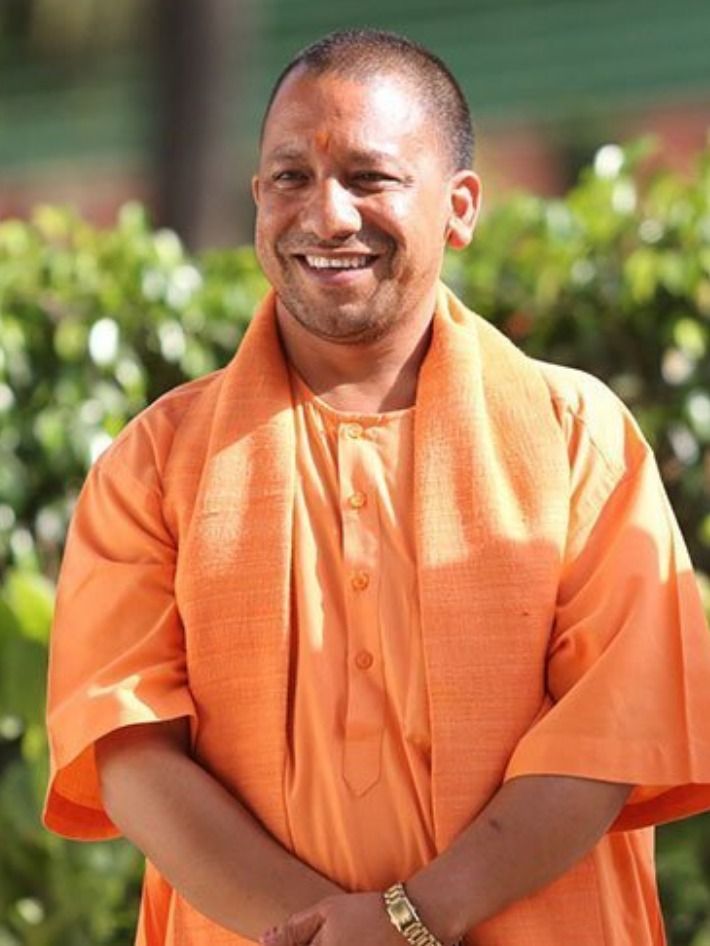
Yogi Adityanath is an Indian politician and Hindu monk, serving as Chief Minister of Uttar Pradesh since 2017. Born Ajay Singh Bisht, he is a Bharatiya Janata Party leader, known his strong views on nationalism, governance, and law-and-order reforms.
Introduction
Yogi Adityanath is one of the most prominent and influential political leaders in contemporary India. Known for his distinctive saffron robes, assertive leadership style, and strong ideological positions, he has emerged as a central figure in Indian politics, particularly in the state of Uttar Pradesh (UP). As the Chief Minister of India’s most populous state, Yogi Adityanath has played a significant role in shaping governance, law and order, religious discourse, and development policies.
From a humble upbringing in a remote Himalayan village to becoming the head of the Uttar Pradesh government, Yogi Adityanath’s journey is marked by spirituality, discipline, political ambition, and controversy. His life reflects a unique fusion of asceticism and power politics—an uncommon combination in modern democratic systems.
This biography explores Yogi Adityanath’s early life, spiritual transformation, political rise, ideological beliefs, governance model, achievements, criticisms, and his broader impact on Indian politics.
Early Life And Family Background
Yogi Adityanath was born on June 5, 1972, in Panchur village of the Pauri Garhwal district in present-day Uttarakhand (then part of Uttar Pradesh). His birth name was Ajay Mohan Bisht. He was born into a middle-class Garhwali Rajput family that relied primarily on agriculture for livelihood.
His father, Anand Singh Bisht, worked as a forest ranger, a government job that provided modest financial stability. His mother, Savitri Devi, was a homemaker who played a crucial role in instilling traditional values and discipline in her children. Ajay Mohan Bisht was one of seven siblings, growing up in an environment that emphasized simplicity, hard work, and self-reliance.
Life in the hilly regions of Uttarakhand was not easy. Limited resources, challenging terrain, and lack of modern infrastructure shaped his early worldview. These formative years instilled resilience, physical endurance, and a deep connection with nature—qualities that later influenced his ascetic life.
Education and Intellectual Development
Ajay Mohan Bisht received his early education in local schools in Uttarakhand. Despite limited facilities, he was a bright and disciplined student, showing interest in mathematics and science. His teachers often described him as quiet, focused, and determined.
After completing his schooling, he pursued higher education at Hemwati Nandan Bahuguna Garhwal University, where he earned a Bachelor’s degree in Mathematics. His academic inclination toward logic and structure is often cited as a reason for his methodical administrative style in later years.
However, during his college years, Ajay Mohan Bisht began to feel disillusioned with conventional career paths. Despite having the option of pursuing further studies or government employment, he experienced a growing spiritual restlessness. He became increasingly interested in Hindu philosophy, nationalism, and monastic life.
Spiritual Turning Point And Renunciation
The most defining moment in Ajay Mohan Bisht’s life came in the early 1990s when he decided to renounce worldly life. Inspired by Hindu saints and the ideals of selfless service, he left his home without informing his family and traveled to Gorakhpur, a major religious center in eastern Uttar Pradesh.
In Gorakhpur, he met Mahant Avaidyanath, the head priest (Mahant) of the Gorakhnath Math, a prominent Hindu monastery associated with the Nath sect founded by Guru Gorakhnath. Impressed by Ajay Mohan Bisht’s discipline and commitment, Mahant Avaidyanath accepted him as a disciple.
Ajay Mohan Bisht underwent rigorous spiritual training and formally embraced sanyasa (monastic renunciation). He was given the name Yogi Adityanath, symbolizing devotion to the sun deity and spiritual awakening.
Life as a Monk And Role at Gorakhnath Math
Yogi Adityanath quickly distinguished himself at the Gorakhnath Math through his discipline, austerity, and organizational abilities. The Math was not just a religious institution but also a center of social and political influence, particularly in eastern Uttar Pradesh.
He immersed himself in:
- Religious studies and rituals
- Yoga and meditation
- Social service activities
- Managing the Math’s administrative affairs
The Nath sect emphasizes physical discipline, nationalism, and social reform, values that deeply influenced Yogi Adityanath’s worldview. He became actively involved in outreach programs related to education, healthcare, and rural development.
Mahant Avaidyanath, who was also a Member of Parliament, gradually began grooming Yogi Adityanath as his political and spiritual successor.
Entry into Politics
Yogi Adityanath formally entered politics in 1998 at the remarkably young age of 26. With the support of Mahant Avaidyanath and the Bharatiya Janata Party (BJP), he contested the Gorakhpur Lok Sabha constituency.
Despite his youth and ascetic appearance, he won the election convincingly, becoming one of the youngest Members of Parliament in India. This victory marked the beginning of a long and influential parliamentary career.
He went on to win the Gorakhpur seat five consecutive times (1998, 1999, 2004, 2009, and 2014), establishing an unbroken electoral record that testified to his popularity and organizational strength.
Parliamentary Career and Political Style
As a Member of Parliament, Yogi Adityanath developed a reputation as a firebrand leader. He was known for his strong speeches, assertive defense of Hindu interests, and vocal opposition to what he perceived as appeasement politics.
Key aspects of his parliamentary career included:
- Advocacy for infrastructure development in eastern UP
- Focus on flood control and disaster management
- Emphasis on national security and anti-terrorism measures
- Promotion of cultural nationalism
He also founded the Hindu Yuva Vahini in 2002, a youth organization aimed at mobilizing Hindu youth. While supporters viewed it as a platform for cultural assertion, critics accused it of encouraging vigilantism and communal polarization.
Ideology and Political Beliefs
Yogi Adityanath’s ideology is rooted in Hindutva, a form of Hindu nationalism that seeks to define Indian identity primarily through Hindu cultural values. He has consistently emphasized:
- Cultural unity
- National security
- Strong governance
- Opposition to religious extremism
He believes that development and cultural pride are not mutually exclusive but complementary. His speeches often highlight historical grievances, national pride, and the need for decisive leadership.
Rise to Chief Ministership of Uttar Pradesh
In March 2017, following the BJP’s landslide victory in the Uttar Pradesh Assembly elections, Yogi Adityanath was appointed Chief Minister of Uttar Pradesh. His selection surprised many political observers, as he was not widely projected as a chief ministerial candidate.
His appointment marked a significant shift in UP politics, signaling the BJP’s confidence in a strong ideological leader to govern a complex and diverse state.
At 44 years of age, Yogi Adityanath became one of the youngest Chief Ministers of Uttar Pradesh.
Governance and Administrative Reforms
As Chief Minister, Yogi Adityanath prioritized law and order, a major concern in Uttar Pradesh. His government launched high-profile initiatives to curb crime, including:
- Crackdowns on organized crime
- Police reforms
- Anti-corruption measures
His administration emphasized infrastructure development, including:
- Expressways and highways
- Airport expansions
- Metro rail projects
- Urban renewal programs
He also focused on welfare schemes related to housing, healthcare, sanitation, and rural development.
Religious and Cultural Policies
Yogi Adityanath placed significant emphasis on religious tourism and cultural revival. Major initiatives included:
- Development of Ayodhya as a spiritual hub
- Promotion of Kashi Vishwanath Corridor
- Beautification of religious sites
Supporters viewed these efforts as cultural renaissance, while critics argued they blurred the line between religion and state.
Handling of COVID-19 And Crisis Management
During the COVID-19 pandemic, Uttar Pradesh faced immense challenges due to its large population. Yogi Adityanath’s government implemented:
- Large-scale testing and vaccination drives
- Temporary hospitals and oxygen plants
- Welfare programs for migrant workers
The government received both praise for scale and criticism for handling shortages during peak waves.
Yogi Adityanath Networth
Second Term and Continued Influence
In 2022, Yogi Adityanath led the BJP to another decisive victory in Uttar Pradesh, becoming the first Chief Minister in decades to return to power consecutively in the state.
His second term emphasized:
- Industrial investment
- Law enforcement modernization
- Digital governance
- Employment generation
He emerged as a key national leader within the BJP and is often mentioned in discussions about India’s future political leadership.
Criticism And Controversies
Yogi Adityanath’s career has not been without controversy. Critics have raised concerns about:
- Freedom of expression
- Treatment of minorities
- Police encounters
- Use of strong rhetoric
Human rights organizations and opposition parties have frequently challenged his policies and statements. Supporters, however, argue that his approach ensures stability and governance efficiency.
Personal Life And Lifestyle
Despite holding high office, Yogi Adityanath continues to live a simple, ascetic life. He remains unmarried, wears traditional saffron robes, and follows strict discipline.
His daily routine includes yoga, meditation, and religious study. He is known for minimal personal possessions and a frugal lifestyle.
Legacy And Impact
Yogi Adityanath represents a new model of leadership in Indian politics—one that combines religious identity with executive power. His tenure has reshaped political discourse in Uttar Pradesh and influenced national debates on governance, culture, and identity.
Supporters see him as a symbol of strong leadership and cultural revival, while critics view him as a polarizing figure. Regardless of perspective, his impact on Indian politics is undeniable.
Conclusion
From Ajay Mohan Bisht, a boy from a Himalayan village, to Yogi Adityanath, a monk-politician and Chief Minister, his journey is extraordinary. It reflects ambition, belief, discipline, and controversy in equal measure.
Yogi Adityanath remains one of the most influential figures in contemporary India, shaping the future of Uttar Pradesh and leaving a lasting imprint on the nation’s political and cultural landscape.
Yogi Adityanath Date Of Birth ?
5 June 1972
Yogi Adityanath which District Belong To ?
Yogi Adityanath is strongly associated with Gorakhpur, Uttar Pradesh.
Yogi Adityanath Which Year of Join Bjp Party ?
In 1998, Yogi Adityanath was elected to the Indian Parliament after joining the BJP.