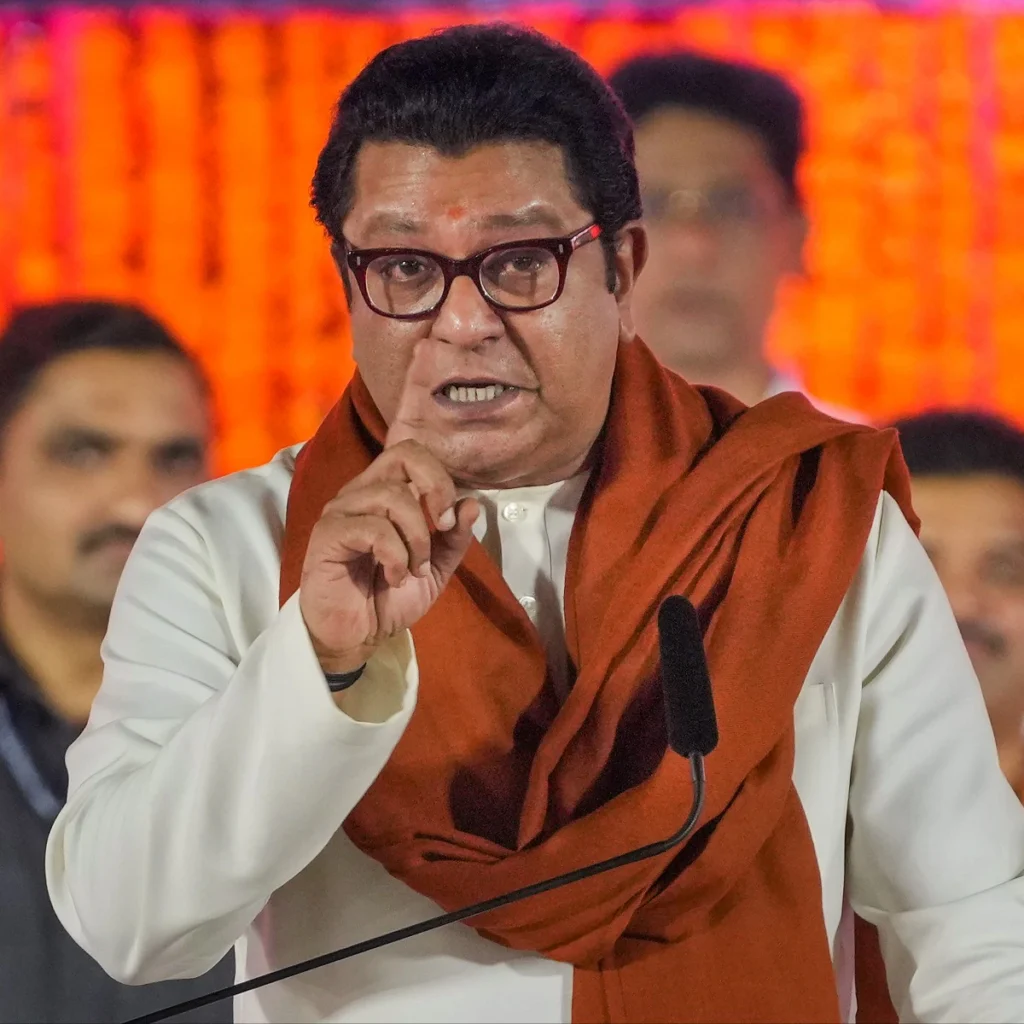
Raj Thackeray is an Indian politician from Maharashtra, founder and president of the Maharashtra Navnirman Sena. Nephew of Shiv Sena founder Bal Thackeray, he is known for fiery oratory, Marathi regionalism, cultural nationalism, and influential role in Mumbai and state politics, active since the 1990s, shaping regional political discourse nationwide.
Introduction
Raj Shrikant Thackeray—more commonly known simply as Raj Thackeray—is a prominent Indian politician, orator, and political organizer who has played a significant role in shaping regional politics in the state of Maharashtra. Born into one of Maharashtra’s most influential political families, Raj’s life and political career have been marked by passionate advocacy for Marathi identity, regional pride, and combative, high-decibel public politics.
He is the founder and president of the Maharashtra Navnirman Sena (MNS)—a political party he established in 2006—and has been a central figure in debates around linguistic identity, migration, and regional rights in Maharashtra for nearly two decades.
In this in-depth biography, we will examine Raj Thackeray’s life trajectory from his upbringing and family background to his political rise, ideological evolution, controversies, impact on Maharashtra’s politics, and enduring legacy.
Family Background and Early Life
Raj Shrikant Thackeray was born on 14 June 1968 in Mumbai, Maharashtra, into the influential Thackeray family—an extended political dynasty associated with Marathi regional politics.
He was born Swararaj Shrikant Thackeray to Shrikant Thackeray and Kunda Thackeray. Shrikant was the younger brother of Bal Thackeray—the fiery founder of the regional party Shiv Sena—while Kunda was the younger sister of Balasaheb’s wife, Meena Thackeray.
Growing up in this environment, Raj was surrounded by political discussion, journalism, and activism. As a child, he was exposed to cultural interests: he learned musical instruments like the tabla, guitar, and violin, and developed artistic skills that would stay with him throughout his life.
Education Details
Raj Thackeray completed his 10th standard education and enrolled in the Sir J.J. Institute of Applied Art in Mumbai, a prestigious art institution. However, he did not complete his degree and eventually dropped out.
His early involvement with art and cartoons would later influence his political communication style—often characterized by symbolic messaging, visual references, and provocative public expressions.
Entry into Politics: Shiv Sena and Early Roles
Raj’s political journey began within the fold of the party led by his uncle, Balasaheb Thackeray—the Shiv Sena.
Shiv Sena Beginnings
Raj started by organizing youth and student wings. He launched the Bharatiya Vidyarthi Sena, a student wing of Shiv Sena, which was intended to spread the party’s message among the young and mobilize them for political campaigns.
During the 1990 Maharashtra Assembly elections, Raj began to rise in prominence through campaigning efforts and organizational work. His ability to connect with cadets and articulate regional pride helped him gain attention within Shiv Sena’s ranks.
A Generational Rift
However, despite being a charismatic and visible figure, Raj’s political aspirations ran into a deep family and party struggle over succession. In the 1990s and early 2000s, Raj believed he was the natural heir to his uncle Bal Thackeray’s political legacy.
But Balasaheb had different plans. Ultimately, he designated his own son Uddhav Thackeray as the successor, appointing him to senior positions within the party hierarchy. Uddhav’s ascendancy, including later becoming the Chief Minister of Maharashtra, cemented his position within Shiv Sena’s formal leadership.
Feeling sidelined and frustrated by this decision, Raj began to distance himself from Shiv Sena’s core decision-making structure, even as he remained active within its ranks.
Break From the Shiv Sena and Maharashtra Navnirman Sena (MNS)
Departure from Shiv Sena
Frustrated by internal party politics and feeling that Shiv Sena was no longer the same force he had envisioned, Raj Thackeray resigned from the party in January 2006.
Shortly after, on 9 March 2006, he launched his own political outfit—the Maharashtra Navnirman Sena (MNS)—from Shivaji Park in Mumbai. The new party was positioned as a breakaway faction with a renewed focus on what Raj described as the developmental needs of Maharashtra and the primacy of Marathi identity.
Early Mission and Ideology
MNS’s ideology was similar in tone to the Shiv Sena’s original principles: it emphasized Marathi pride, the protection of local jobs for Maharashtrians, and resistance to perceived economic and cultural domination by “outsiders,” particularly migrants from other states.
Raj’s founding statement stressed that he did not seek hostility with his uncle Bal Thackeray, whom he called his mentor, even as he established a separate political path.
In practice, MNS would become known for its assertive demands on linguistic identity, campaigning for Marathi signboards, protection of local jobs, and in some instances confrontational public politics.
Political Career and Activities
MNS’s Rise and Early Electoral Success
In the first years after its formation, MNS captured public attention through rallies, protest actions, and direct engagement with issues like employment, cultural pride, and language policies.
In 2009, in its first major electoral test, the MNS contested the Maharashtra Assembly elections, where it won 13 seats—a significant achievement for a newly formed regional party.
This period represented the high point of MNS’s mainstream visibility and influence, particularly in urban centers such as Mumbai and Nashik.
Nashik Municipal Corporation and Local Governance
MNS’s performance in the municipal elections, particularly in Nashik, further solidified its relevance in local governance and grassroots politics. In Nashik, the party succeeded in gaining power and influencing local administrative priorities.
Shifts in Strategy and Decline
However, in the subsequent elections—including the 2014 and 2019 Maharashtra Assembly elections—MNS’s performance declined sharply.
In 2014, despite the initial momentum from 2009, the party won only one seat in the Assembly. In 2019, it again managed to secure only one seat.
The trend indicated that while Raj Thackeray’s rhetoric continued to draw media attention, the party was struggling to expand its voter base beyond its core urban Marathi constituency.
Electoral Results in the 2020s
As political competition in Maharashtra intensified in the 2020s, with multiple parties vying for voter loyalty, MNS found it increasingly difficult to maintain electoral ground. This was evident in the 2024 state elections, where the party failed to win any seats, and its vote share shrank significantly.
Moreover, in local civic polls like the Brihanmumbai Municipal Corporation (BMC) elections, Raj’s party also struggled, managing only a few winnable seats amidst a strong contest from established political rivals.
Raj Thackeray Networth
Ideological Focus and Public Positions
Marathi Identity and Regionalism
Raj Thackeray’s political messaging has consistently emphasized Marathi identity, cultural pride, and the protection of the rights and jobs of Maharashtrians. This included campaigns for Marathi language signboards and advocacy against what he described as “outsider” domination in urban job markets.
This focus resonated with many voters who shared concerns about economic competition, linguistic heritage, and cultural space in rapidly changing urban environments.
Controversial Language and Rhetoric
At times, Raj’s rhetoric has been provocative, invoking sharp language against various groups. Critics have labelled some of his public statements and political strategies as polarizing and hateful politics, especially during heated campaigns.
Shift in Focus: Marathiism Over Hindutva
In recent years, Raj’s political stance has shown a gradual shift from explicitly Hindutva-oriented rhetoric to a more focused emphasis on Marathi regionalism (“Marathivad”). This strategic repositioning was partly aimed at reconnecting with voters who felt alienated by extreme polarization and seeking to broaden his appeal around issues like cultural rights and state development.
Political Leaders and Parties
Interactions with Shiv Sena
Raj’s relationship with the Shiv Sena—and particularly with Uddhav Thackeray—has oscillated between rivalry and episodic cooperation. For many years after MNS was formed, the two factions were political rivals in Maharashtra’s regional politics.
However, in the mid-2020s, there have been instances of rapprochement, including joint public appearances and shared platforms advocating for Marathi pride and cultural identity.
These collaborations signal a nuanced political landscape where former rivals sometimes align on shared regional issues, even while maintaining separate party identities.
Relations With BJP and Others
Raj’s relations with national parties like the Bharatiya Janata Party (BJP) have been complex. At times, his rhetoric aligned with broader regional Hindu nationalist themes; at other points, he openly criticized national leaders—reflecting a tactical flexibility tied to Maharashtra’s evolving political currents.
Controversies and Legal Challenges
Over his political career, Raj Thackeray and his party have been part of several controversies, including allegations of fomenting public unrest in confrontational campaign moments. His strong language and mobilization tactics have drawn both support and criticism.
One significant issue remains legal challenges related to the 2008 unrest connected with agitation around railway recruitment issues, in which Raj has faced accusations and court appearances, especially as civic elections approached.
Critics argue that such episodes reflect deeper concerns about the role of aggressive political mobilization and the boundaries of democratic protest, while supporters frame them as necessary assertiveness in defense of regional interests.
Personal Life
Raj Thackeray’s personal life is rooted in his family and cultural interests:
- Spouse: Raj is married to Sharmila Thackeray (née Wagh), daughter of a noted Marathi cinema photographer and producer-director, Mohan Wagh.
- Marriage: They wed on 11 December 1990 in Mumbai.
- Children: They have two children—a son, Amit Thackeray, and a daughter, Urvashi Thackeray.
Raj’s family life is often discussed in the context of how political legacies are carried forward in Maharashtra—but he remains a private individual on personal matters compared to his public political profile.
Public Image and Perception
Raj Thackeray is a polarizing figure in contemporary Indian politics. He is admired by supporters for his passionate advocacy of Marathi identity and willingness to confront political rivals. Conversely, opponents criticize his confrontational style, rhetoric that can inflame regional and linguistic tensions, and the decline in his party’s electoral fortunes over time.
Public perception varies widely—some see him as a necessary voice for regional rights, others regard his approach as symbolic but less effective in practical governance outcomes.
Legacy and Continuing Influence
Even as his party’s electoral performance has fluctuated, Raj Thackeray’s impact on Maharashtra’s political discourse is undeniable:
- He brought regional identity issues into sharper focus in urban politics.
- He influenced how parties frame narratives around linguistic pride, employment, and migration.
- He demonstrated the potential—and limits—of regional splinter parties in India’s complex multi-party system.
Whether Raj Thackeray’s political force continues to grow, declines further, or finds renewed relevance through alliances and shifting strategies, his name and legacy are firmly etched in Maharashtra’s political history.
Conclusion
Raj Thackeray’s life and career reflect the dynamics of regional politics in India—deeply rooted in cultural identity, familial heritage, and the demands of political mobilization. From his roots in a powerful political family to his efforts to forge a distinct path with the MNS, Raj’s story illustrates both the opportunities and challenges of leading a regional political movement in an era of competitive party politics.
His blend of oratory, public mobilization, and regional advocacy continues to shape debates in Maharashtra—and regardless of future electoral outcomes, Raj Thackeray remains a key figure in understanding the state’s political evolution over the past two decades.
Raj Thackeray Date Of Birth ?
14 June 1968
Raj Thackeray Age ?
57 years
Raj Thackeray Networth
assets around ₹16.17 crore (approximately $2 million USD)