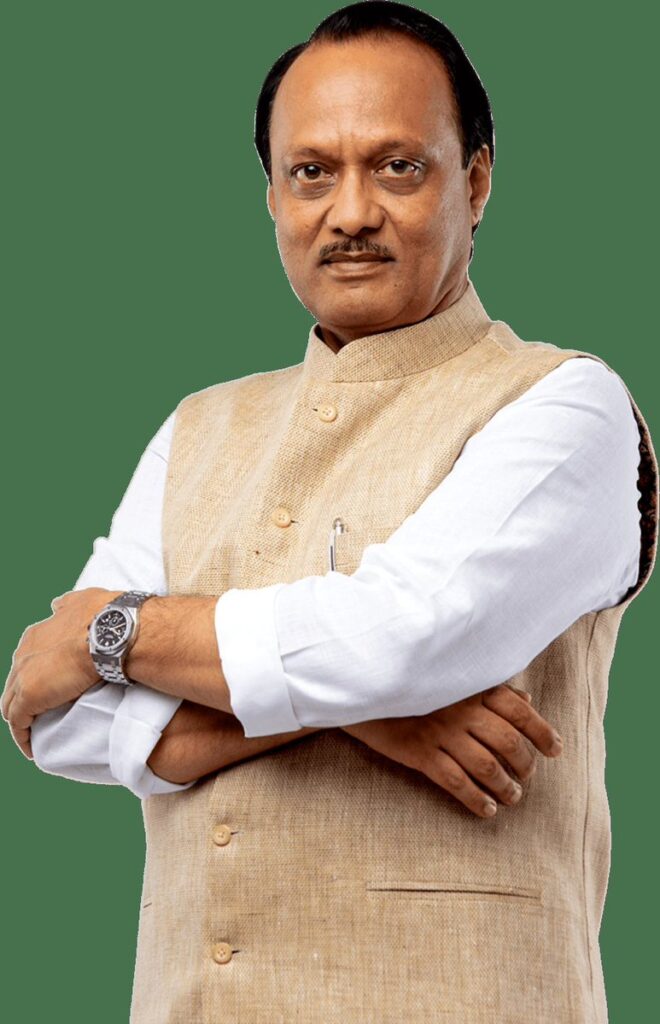
Ajit Pawar is an Indian politician from Maharashtra, known for his influential role in state politics. A senior leader of the Nationalist Congress Party, he has served multiple terms as Deputy Chief Minister, handling key portfolios, and is recognized for his administrative experience and assertive leadership style and governance matters.
Introduction
Ajit Anantrao Pawar is one of the most influential, controversial, and enduring political figures in the state of Maharashtra, India. Known for his administrative acumen, sharp political instincts, and strong control over cooperative institutions, Ajit Pawar has played a decisive role in Maharashtra’s politics for more than three decades. A senior leader of the Nationalist Congress Party (NCP) for most of his career and a key figure in state governance, Pawar has served multiple terms as Deputy Chief Minister of Maharashtra, shaping policies related to finance, irrigation, agriculture, and rural development.
As the nephew of veteran political leader Sharad Pawar, Ajit Pawar inherited a formidable political legacy but carved out his own identity through a mix of assertive leadership, mass appeal in western Maharashtra, and a reputation for administrative toughness. His career has been marked by electoral victories, internal party conflicts, allegations of corruption, dramatic political rebellions, and repeated comebacks—making him one of the most complex personalities in contemporary Indian state politics.
Early Life and Family Background
Ajit Pawar was born on 22 July 1959 in Deolali Pravara, located in Ahmednagar district (now part of Maharashtra). He comes from a politically influential Maratha agrarian family, deeply rooted in rural Maharashtra.
Family Lineage
- Father: Anantrao Pawar
- Mother: Ashatai Pawar
- Uncle: Sharad Pawar – former Chief Minister of Maharashtra, Union Minister, and founder of the Nationalist Congress Party
Sharad Pawar’s towering presence in Maharashtra’s political landscape inevitably shaped Ajit Pawar’s exposure to public life from an early age. However, Ajit Pawar’s political rise was neither automatic nor entirely dependent on his uncle’s influence. While Sharad Pawar was a national-level leader with a reputation for strategic thinking, Ajit Pawar’s strength lay in grassroots organization, rural politics, and institutional control, particularly within cooperative societies.
Education Background
Ajit Pawar completed his early education in Maharashtra and later obtained a Bachelor’s degree in Economics. While not known for an academic background in elite institutions, Pawar’s practical understanding of economics, especially rural and cooperative finance, became evident during his political career.
Entry into Politics
Ajit Pawar entered politics in the early 1980s, a period when Maharashtra politics was dominated by the Indian National Congress and powerful cooperative leaders. His political grooming took place under Sharad Pawar’s mentorship but also through direct involvement in local governance, cooperative sugar factories, and rural development bodies.
Initial Political Roles
Before contesting legislative elections, Pawar worked extensively in:
- Agricultural cooperative societies
- Sugar cooperatives
- District-level planning committees
These institutions are crucial in western Maharashtra, where sugar factories often function as political power centers. Ajit Pawar’s early success in these bodies helped him establish a loyal support base among farmers and rural voters.
First Electoral Victory (1991)
Ajit Pawar was elected to the Maharashtra Legislative Assembly for the first time in 1991 from the Baramati constituency, a seat long associated with the Pawar family. Baramati, located in Pune district, is considered a stronghold of Sharad Pawar and later became Ajit Pawar’s political bastion.
He has since been re-elected multiple times, often with significant margins, demonstrating his deep-rooted influence in the region.
Baramati Constituency
Baramati is not just a political seat but a symbol of Pawar family dominance. Ajit Pawar’s electoral success here has been attributed to:
- Development-oriented politics
- Strong cooperative networks
- Direct engagement with farmers
- Effective local administration
Rise within the Nationalist Congress Party
Formation of NCP (1999)
In 1999, Sharad Pawar broke away from the Indian National Congress to form the Nationalist Congress Party (NCP). Ajit Pawar became one of the party’s most important organizational leaders in Maharashtra.
Role in Party Organization
Ajit Pawar was instrumental in:
- Strengthening the NCP’s rural base
- Managing election strategies
- Controlling cooperative institutions aligned with the party
He quickly emerged as the most powerful regional leader after Sharad Pawar within the NCP.
Deputy Chief Minister of Maharashtra
Ajit Pawar has served as Deputy Chief Minister on multiple occasions, making him one of the longest-serving politicians in that role in the state’s history.
First Term (2010–2012)
He became Deputy Chief Minister in November 2010 during the Congress–NCP coalition government led by Chief Minister Prithviraj Chavan.
- Key Portfolios: Finance, Planning
- Known for decisive budgetary control
- Played a major role in state financial management
However, his first term ended amid allegations related to the irrigation sector, leading to his resignation in 2012.
Return to Office (2013–2014)
After resigning, Ajit Pawar made a political comeback and was reappointed Deputy Chief Minister in 2013, continuing until the end of the Congress–NCP government in 2014.
One of the most significant controversies of Ajit Pawar’s career relates to alleged irregularities in irrigation projects during his tenure as Water Resources Minister.
Nature of Allegations
- Cost escalations in irrigation projects
- Alleged financial mismanagement
- Questions raised by opposition parties and activists
Political Impact
- Led to temporary resignation
- Damaged public image
- Became a major talking point in Maharashtra politics
Despite the controversy, Pawar maintained strong political support, particularly in his home region.
Role in Cooperative Politics
Ajit Pawar is often described as the “strongman of cooperative politics” in Maharashtra.
Sugar Cooperatives
Western Maharashtra’s sugar belt has long been politically influential. Ajit Pawar:
- Controlled or influenced multiple sugar factories
- Used cooperatives as platforms for political mobilization
- Strengthened NCP’s dominance in rural areas
Financial Institutions
He also held influence over cooperative banks and credit societies, which are critical for agricultural financing in the state.
Political Style and Leadership
Ajit Pawar’s leadership style is distinct from that of his uncle.
Key Characteristics
- Blunt and assertive communication
- Strong administrative control
- Focus on results rather than rhetoric
- Reputation for discipline and authority
He is often described as a pragmatic, no-nonsense leader, though critics view him as authoritarian.
2019 Political Crisis and Rebellion
One of the most dramatic episodes in Ajit Pawar’s career occurred in November 2019, following the Maharashtra Assembly elections.
Unexpected Alliance Shift
- Ajit Pawar briefly broke away from the NCP
- Supported the Bharatiya Janata Party (BJP)
- Took oath as Deputy Chief Minister in a short-lived government
This move shocked Maharashtra’s political landscape and created a rift within the Pawar family.
Aftermath
- The government collapsed within days
- Ajit Pawar returned to the NCP
- Sharad Pawar reasserted control over the party
This episode highlighted Ajit Pawar’s independent political ambitions and willingness to take bold risks.
Relationship with Sharad Pawar
The relationship between Ajit Pawar and Sharad Pawar has been one of the most discussed aspects of Maharashtra politics.
Mentor and Nephew
- Sharad Pawar mentored Ajit Pawar politically
- Ajit Pawar handled organizational and mass politics
Tensions and Differences
- Leadership succession debates
- Ideological and strategic disagreements
- Publicly visible during the 2019 crisis
Despite tensions, both leaders have periodically reconciled for political stability.
Mass Appeal and Support Base
Ajit Pawar enjoys significant support among:
- Farmers
- Cooperative members
- Rural voters in western Maharashtra
His image as a development-oriented leader has helped him retain voter loyalty despite controversies.
Criticism and Controversies
Ajit Pawar’s career has not been without criticism.
Major Criticisms
- Allegations of corruption
- Concentration of power
- Dynastic politics
Opposition parties often portray him as a symbol of entrenched political elites, while supporters argue he delivers results.
Administrative Contributions
Finance and Planning
As Finance Minister, Pawar was known for:
- Tight fiscal management
- Large infrastructure allocations
- Support for rural development
Agriculture and Water Resources
- Focus on irrigation projects
- Expansion of agricultural infrastructure
- Support for sugarcane farmers
Public Image and Media Portrayal
Ajit Pawar’s public image is complex.
- Seen as efficient but controversial
- Admired for decisiveness
- Criticized for blunt language
He has often been in the news for strong statements, which sometimes sparked political debates.
Personal Life
Ajit Pawar is known to keep his personal life relatively private.
- Married with children
- Family members have also entered politics
- Maintains strong ties with Baramati
Despite his high-profile career, he prefers a low-key personal lifestyle.
Legacy and Significance
Ajit Pawar’s political journey reflects the evolution of Maharashtra politics over the last three decades.
Key Aspects of His Legacy
- Strengthened cooperative-based politics
- Influenced state financial policy
- Played kingmaker roles in coalition politics
- Demonstrated resilience and adaptability
Whether admired or criticized, his impact on Maharashtra’s political landscape is undeniable.
Conclusion
Ajit Pawar remains one of the most formidable and polarizing figures in Indian state politics. His career encapsulates the complexities of coalition governance, regional power structures, and dynastic leadership in modern India. Through electoral victories, controversies, and political upheavals, Pawar has shown an ability to survive and reinvent himself.
As Maharashtra continues to witness shifting political alignments, Ajit Pawar’s role—whether as a stabilizing force or a disruptive strategist—will remain crucial. His biography is not just the story of one man but a reflection of the broader dynamics that define Maharashtra’s political life.
Ajit Pawar Date Of Birth ?
22 Jul 1959
Ajit Pawar Networth ?
approximately Rs 124 crore.
Ajit Pawar Which Reason Of Death ?
Ajit Pawar died in a tragic plane crash in Baramati, Maharashtra.