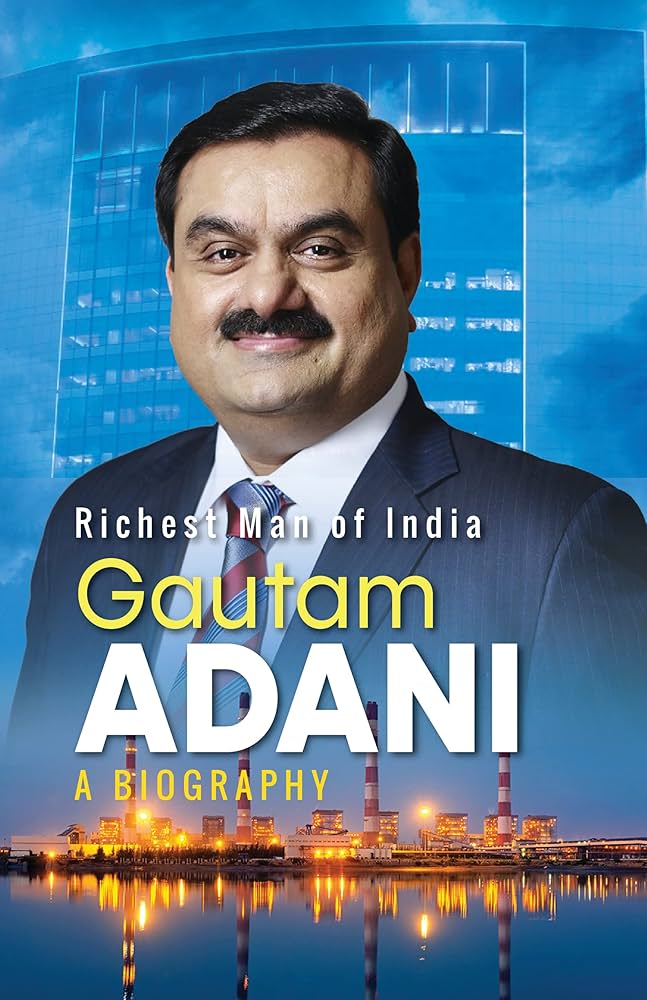
Gautam Adani is an Indian billionaire industrialist and founder of the Adani Group. he built a global infrastructure empire spanning ports, power, renewable energy, airports, and logistics through vision and leadership.
Introduction
Gautam Shantilal Adani is one of India’s most influential business leaders and industrialists. He is the founder and chairman of the Adani Group, a multinational conglomerate with interests in ports, logistics, power generation, renewable energy, mining, airports, infrastructure, and agribusiness. Rising from a modest background, Adani’s journey reflects ambition, risk-taking, and a deep understanding of global trade and infrastructure development. Over the decades, he has played a major role in shaping India’s infrastructure growth and positioning Indian enterprises on the global stage.
Early Life and Family Background
Gautam Adani was born on June 24, 1962, in Ahmedabad, Gujarat, India, into a middle-class Jain family. His father, Shantilal Adani, ran a small textile business, while his mother, Anjali Adani, was a homemaker. Gautam was the seventh of eight children, growing up in a crowded but value-driven household.
From an early age, Adani showed an interest in business and commerce rather than academics. He attended Sheth Chimanlal Nagindas Vidyalaya, a local school in Ahmedabad, and later enrolled at Gujarat University to study commerce. However, his entrepreneurial spirit soon outweighed his interest in formal education, and he dropped out during his second year. This decision marked the beginning of a life defined by self-learning, real-world experience, and bold choices.
Early Career and First Business Experiences
In the late 1970s, Gautam Adani moved to Mumbai (then Bombay) at the age of 16. With little money and no formal business connections, he began working as a diamond sorter at Mahindra Brothers, a leading diamond trading firm. This experience proved crucial, as it introduced him to international trade, foreign exchange, and market dynamics.
Within a few years, Adani gained confidence and industry knowledge, enabling him to start his own diamond brokerage business in Mumbai. The venture was successful and allowed him to accumulate initial capital. More importantly, it sharpened his understanding of global markets and risk management—skills that would later become central to his business empire.
In 1988, Adani returned to Ahmedabad and founded Adani Enterprises, originally named Adani Exports. This marked the formal beginning of the Adani Group.
Founding of the Adani Group
Adani Exports began as a small trading firm dealing primarily in agricultural commodities such as spices and grains. Gautam Adani identified the potential in India’s export market at a time when the country was slowly opening its economy. His ability to foresee growth opportunities helped the company expand rapidly.
The economic liberalization of India in 1991 proved to be a turning point. Reduced trade barriers, improved access to foreign capital, and policy reforms created an environment in which Adani’s trading business could thrive. Adani Exports diversified into coal, edible oils, and other commodities, steadily increasing its scale and reach.
Entry into Infrastructure and Ports Business
One of the most defining moments in Gautam Adani’s career came in the mid-1990s, when he ventured into infrastructure development, particularly ports. In 1995, the Gujarat government invited private players to develop ports as part of its economic development strategy. Adani won the contract to develop Mundra Port, a then-underdeveloped coastal area in Gujarat.
Despite skepticism and limited infrastructure, Adani envisioned Mundra as a world-class port. Through persistent investment and long-term planning, Mundra Port grew into India’s largest commercial port. This success transformed the Adani Group from a trading company into a major infrastructure powerhouse.
The port business laid the foundation for further expansion into logistics, rail connectivity, and industrial zones, enabling the group to control multiple aspects of the supply chain.
Expansion into Power and Energy
Recognizing India’s growing energy needs, Gautam Adani expanded into the power generation sector in the early 2000s. The Adani Group established large thermal power plants, including projects at Mundra and Tiroda. These plants played a significant role in addressing electricity shortages in various regions of India.
Later, Adani shifted focus toward renewable energy, particularly solar and wind power. Through Adani Green Energy Limited, the group became one of the world’s largest renewable energy companies. This transition aligned with global efforts to combat climate change and supported India’s renewable energy targets.
Gautam Adani Networth
Diversification into Airports, Mining, and Other Sectors
Under Gautam Adani’s leadership, the group continued to diversify aggressively. It entered the airport management sector, taking over operations of major Indian airports, including those in Mumbai, Ahmedabad, Lucknow, Jaipur, and Guwahati. This move strengthened the group’s position in transportation infrastructure.
The Adani Group also expanded into coal mining, both in India and abroad, particularly in Australia. While these projects generated economic value and energy security, they also attracted criticism from environmental groups.
Other ventures included data centers, defense manufacturing, cement, petrochemicals, and city gas distribution, showcasing Adani’s strategy of building an integrated infrastructure ecosystem.
Leadership Style and Business Philosophy
Gautam Adani is known for his long-term vision, bold risk-taking, and strong execution capabilities. He believes in investing ahead of demand and building assets that generate value over decades. His leadership style emphasizes decentralization, allowing professional management teams to operate businesses while maintaining strategic oversight.
Adani often highlights the importance of nation-building, stating that infrastructure development is essential for India’s economic growth. He views businesses not merely as profit-making entities but as contributors to national development.
Challenges and Controversies
Like many large industrialists, Gautam Adani has faced controversies and criticism. Allegations related to environmental concerns, corporate governance, and regulatory issues have periodically surfaced. Some critics have questioned the group’s rapid expansion and high debt levels.
Despite these challenges, Adani has consistently defended his business practices, emphasizing transparency, compliance, and long-term sustainability. The group has undertaken efforts to improve governance standards and environmental responsibility.
Personal Life
Gautam Adani is married to Priti Adani, a dentist by profession and the chairperson of the Adani Foundation, the group’s philanthropic arm. The couple has two sons, Karan Adani and Jeet Adani, both of whom are involved in various businesses of the Adani Group.
Despite his immense wealth, Adani is known for maintaining a relatively low public profile. He avoids media attention and focuses primarily on business operations and strategic planning.
Philanthropy and Social Initiatives
The Adani Foundation, established in 1996, focuses on education, healthcare, rural development, and skill training. Under Priti Adani’s leadership, the foundation has impacted millions of lives across India.
Gautam Adani has also pledged significant portions of his wealth toward social causes, particularly in areas such as healthcare infrastructure and education. His philanthropic efforts reflect a belief in inclusive growth and social responsibility.

Global Recognition and Achievements
Over the years, Gautam Adani has received numerous awards and recognitions for his contributions to business and infrastructure development. He has frequently appeared on global lists of influential business leaders and billionaires.
His rise to become one of the wealthiest individuals in the world symbolizes the potential of Indian entrepreneurship in the global economy. More importantly, his journey represents the transformation of India from a developing economy to a major global player.
Vision for the Future
Gautam Adani envisions the Adani Group as a key driver of India’s sustainable development. The group continues to invest heavily in renewable energy, digital infrastructure, and logistics networks. Adani’s long-term goal is to align business growth with environmental responsibility and technological innovation.
He believes that India’s future lies in self-reliance, infrastructure strength, and global competitiveness, and he sees his businesses as catalysts for achieving these objectives.
Conclusion
Gautam Adani’s life story is a powerful example of how determination, vision, and strategic thinking can transform modest beginnings into extraordinary success. From a college dropout working in Mumbai’s diamond markets to the chairman of a global conglomerate, his journey reflects resilience and ambition.
While his career has not been without controversy, there is no denying his impact on India’s infrastructure landscape and economic growth. Gautam Adani remains a significant figure in modern Indian business history—one whose influence will continue to shape the nation’s development for years to come.
Gautam Adani Date Of Birth ?
24 June 1962
Gautam Adani Father Name ?
Shantilal Adani
Gautam Adani Actual Monthly Income ?
₹87 lakh per month