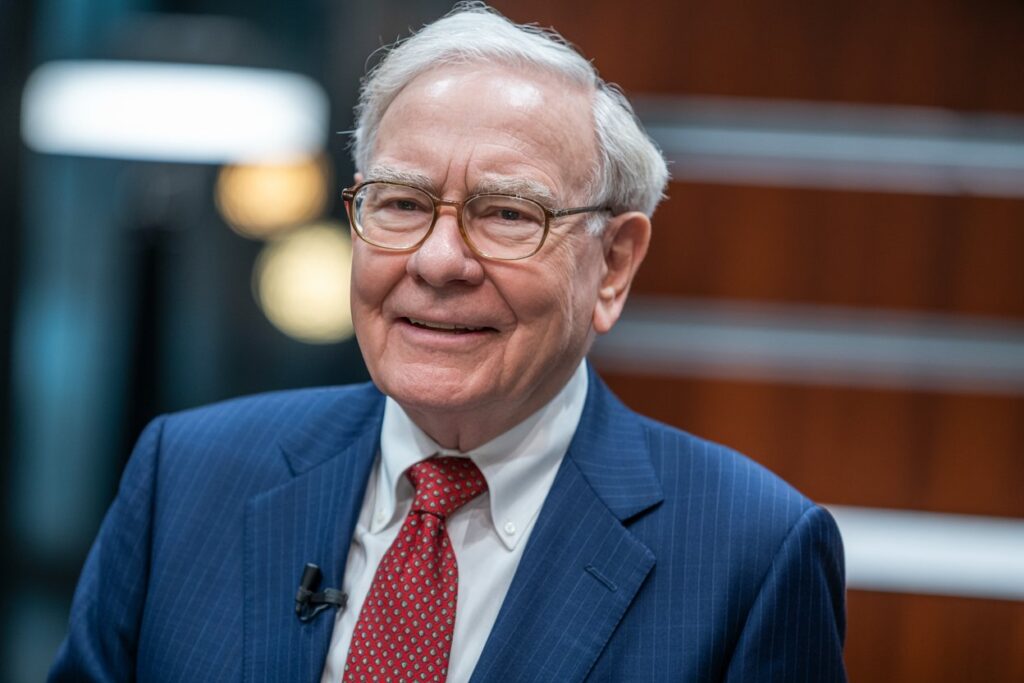
Warren Edward Buffett is one of the most influential investors, business leaders, and philanthropists in modern history. Known worldwide as the “Oracle of Omaha,” Buffett built his immense fortune through disciplined investing, patience, and a deep understanding of business fundamentals.
Introduction :
Warren Edward Buffett is one of the most influential investors, business leaders, and philanthropists in modern history. Known worldwide as the “Oracle of Omaha,” Buffett built his immense fortune through disciplined investing, patience, and a deep understanding of business fundamentals. Beyond his financial success, he is admired for his humility, ethical principles, and commitment to giving away most of his wealth. Buffett’s life story is not merely one of riches but of consistency, rational thinking, and long-term vision.
Early Life and Family Background
Warren Edward Buffett was born on August 30, 1930, in Omaha, Nebraska, during the early years of the Great Depression. He was the second of three children and the only son of Howard Homan Buffett and Leila Stahl Buffett. His father was a stockbroker and later served as a U.S. Congressman, which exposed young Warren early to the world of finance and economics.
From a very young age, Buffett showed an extraordinary aptitude for numbers and business. He was fascinated by how money worked and how businesses generated profits. By the age of six, he had already begun experimenting with small entrepreneurial ventures. One of his earliest businesses involved buying packs of Coca-Cola bottles and reselling them individually for a profit—an early sign of his instinctive understanding of margins and value.
Early Entrepreneurial Ventures
Buffett’s childhood was marked by constant business experiments. At age 11, he purchased his first stock—three shares of Cities Service Preferred—using his own savings. Although the stock initially dropped in value, Buffett held on until it rebounded and sold it for a modest profit. This experience taught him two critical lessons: the emotional challenges of investing and the importance of patience.
As a teenager, Buffett delivered newspapers, sold golf balls, and operated pinball machines placed in local barber shops. By the time he graduated from high school, he had accumulated savings equivalent to tens of thousands of dollars in today’s terms. His determination to earn and invest money was already exceptional.
Education and Intellectual Development
After high school, Buffett enrolled at the University of Pennsylvania’s Wharton School, but he found the program uninspiring and transferred after two years to the University of Nebraska–Lincoln. There, he graduated with a Bachelor of Science in Business Administration at just 19 years old.
Buffett initially wanted to skip graduate school and pursue investing full-time, but his father encouraged further education. He applied to Harvard Business School and was rejected, an event Buffett later described humorously as one of the best things that ever happened to him. Instead, he enrolled at Columbia Business School, where he studied under Benjamin Graham, the father of value investing.
Graham’s philosophy profoundly shaped Buffett’s approach to investing. Graham emphasized buying stocks at prices below their intrinsic value and focusing on a “margin of safety.” Buffett absorbed these principles eagerly and later described Graham as the second most important influence in his life, after his father.
Early Career and Partnership Years
After earning his master’s degree in economics from Columbia in 1951, Buffett worked briefly at Graham-Newman Corp., Benjamin Graham’s investment firm. When Graham retired, Buffett returned to Omaha and began managing investment partnerships using money from family and friends.
In 1956, Buffett formally established Buffett Partnership Ltd. Starting with a modest amount of capital, he achieved remarkable returns, consistently outperforming the stock market. Buffett’s investment style during this period closely followed Graham’s teachings, focusing on undervalued companies with strong balance sheets.
By the early 1960s, Buffett’s reputation as an exceptional investor had grown, and his partnerships managed millions of dollars. However, he began to evolve beyond Graham’s strict quantitative methods, gradually adopting a more qualitative approach that emphasized strong management, durable competitive advantages, and long-term growth.
The Transformation of Berkshire Hathaway
One of the most defining chapters of Buffett’s career was his involvement with Berkshire Hathaway, a struggling textile manufacturing company. Buffett initially invested in Berkshire as a classic value play, believing its stock was undervalued. However, the textile business continued to decline due to foreign competition and structural inefficiencies.
Rather than abandoning the company entirely, Buffett made a pivotal decision: he transformed Berkshire Hathaway into a holding company for investments. Under his leadership, Berkshire gradually exited textiles and reinvested capital into insurance companies, utilities, railroads, and consumer brands.
The acquisition of National Indemnity Company in 1967 marked Berkshire’s entry into the insurance business, which became central to its success. Insurance “float”—premiums collected before claims are paid—provided Buffett with large amounts of low-cost capital to invest.
Warren Buffett Networth
Investment Philosophy and Strategy
Warren Buffett’s investment philosophy is grounded in simplicity, discipline, and long-term thinking. He famously advises investors to “buy a wonderful company at a fair price rather than a fair company at a wonderful price.”
Key principles of Buffett’s approach include:
- Intrinsic Value – Buffett seeks to estimate the true worth of a business based on its future cash flows.
- Margin of Safety – He invests only when the price offers protection against errors or unforeseen events.
- Economic Moat – Buffett favors companies with durable competitive advantages that protect long-term profitability.
- Management Quality – He places great trust in honest, capable managers.
- Long-Term Holding – Buffett often holds investments for decades, minimizing transaction costs and taxes.
His portfolio includes iconic companies such as Coca-Cola, Apple, American Express, GEICO, and See’s Candies. Notably, Apple became Berkshire Hathaway’s largest holding, reflecting Buffett’s evolving view of technology companies as consumer brands with strong ecosystems.
Leadership Style and Corporate Culture
As Chairman and CEO of Berkshire Hathaway, Buffett cultivated a unique corporate culture based on decentralization and trust. Berkshire’s subsidiaries operate independently, with minimal interference from headquarters. Buffett believes that capable managers perform best when given autonomy and accountability.
Buffett is also known for his clear and candid communication, particularly through Berkshire Hathaway’s annual shareholder letters. These letters are widely read and studied for their wisdom, humor, and insights into business and investing.
Personal Life and Character
Despite his immense wealth, Warren Buffett is renowned for his modest lifestyle. He has lived in the same Omaha house since 1958, purchased for $31,500. He is known for his love of simple pleasures such as fast food, Coca-Cola, bridge, and reading.
Buffett married Susan Thompson in 1952, and they had three children: Susan, Howard, and Peter. Although they later lived separately, they remained close until Susan’s death in 2004. In 2006, Buffett married Astrid Menks, his longtime companion.
His personal habits reflect his belief in rationality and contentment. Buffett often emphasizes that happiness comes from meaningful relationships and intellectual engagement rather than material possessions.
Philanthropy and The Giving Pledge
One of Buffett’s most significant contributions outside of business is his commitment to philanthropy. In 2006, he announced plans to donate the vast majority of his wealth to charitable causes, primarily through the Bill & Melinda Gates Foundation.
In 2010, Buffett co-founded The Giving Pledge with Bill and Melinda Gates. The initiative encourages billionaires to commit at least half of their wealth to philanthropy. Since its inception, hundreds of wealthy individuals from around the world have joined the pledge.
Buffett has consistently argued that vast wealth carries a moral responsibility and that philanthropy should address global challenges such as poverty, healthcare, and education.
Challenges, Criticism, and Adaptation
While Buffett’s career has been extraordinarily successful, it has not been without criticism. Some critics argue that Berkshire Hathaway’s size limits its future growth, while others note that Buffett was initially slow to embrace technology investments.
Buffett has acknowledged mistakes openly, emphasizing the importance of learning from failure. His willingness to adapt—seen in Berkshire’s increasing exposure to technology and renewable energy—demonstrates intellectual humility and flexibility.

Legacy and Influence
Warren Buffett’s influence extends far beyond his financial achievements. He has shaped how millions of investors think about risk, value, and long-term planning. His emphasis on ethics, patience, and rational decision-making stands in contrast to short-term speculation and market hype.
Buffett has also redefined what it means to be wealthy, showing that humility, generosity, and integrity can coexist with extraordinary success. His annual meetings in Omaha, often called the “Woodstock for Capitalists,” attract tens of thousands of shareholders from around the world.
Conclusion
Warren Buffett’s life is a testament to the power of discipline, curiosity, and long-term thinking. From a young boy selling Coca-Cola bottles to one of the richest and most respected individuals on the planet, Buffett’s journey illustrates that success does not require complexity or extravagance.
Through his investment philosophy, leadership style, and philanthropic commitments, Buffett has left an indelible mark on global finance and society. His story continues to inspire investors, entrepreneurs, and thinkers who seek not just wealth, but wisdom and purpose.
Warren Buffett DOB ?
30 August 1930
Warren Buffett Age ?
95 years
Warren Buffett Networth ?
$148.9 to $150 billion,