Ilya Sutskever is a computer scientist and AI researcher, co-founder of OpenAI and former chief scientist. Trained under Geoffrey Hinton, he helped pioneer deep learning breakthroughs in neural networks, large language models, and reinforcement learning, shaping modern artificial intelligence research and deployment worldwide across academia, industry, and transformative global applications.
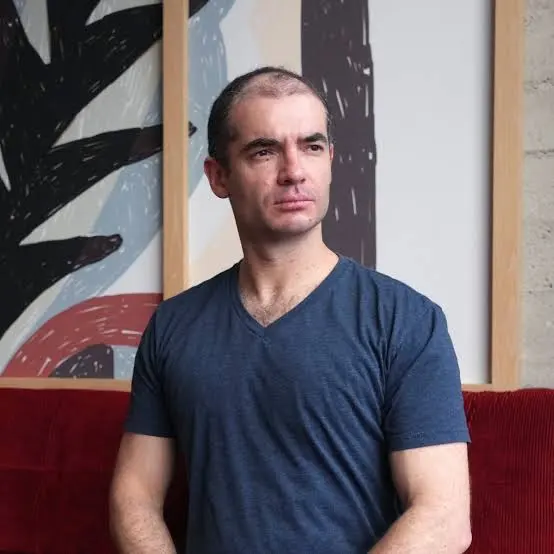
Introduction :
Ilya Sutskever is an Israeli-Canadian computer scientist and one of the most influential figures in modern artificial intelligence. Born in Russia in 1986, he moved first to Israel and later to Canada, where he earned his BSc, MSc, and PhD in computer science at the University of Toronto under Geoffrey Hinton, a pioneer of deep learning. Sutskever’s early work helped spark the deep learning revolution. In 2012, he co-developed AlexNet, a convolutional neural network that dramatically improved image recognition and helped revive neural networks as a core AI technology. He also contributed to sequence-to-sequence learning, foundational for machine translation and later language models.
Early Life and Background
Ilya Efimovich Sutskever was born in 1985/1986 in Nizhny Novgorod, Russia (then called Gorky), a major city in the Soviet Union. Born into a Jewish family in a society undergoing major political and economic upheaval, Sutskever’s early years were shaped by both the collapse of the Soviet state and the intellectual traditions of his family. His parents were part of a generation that valued education and scientific achievement, especially in mathematics and the sciences — norms common among Soviet-era Jewish families with academic aspirations.
At the age of five, Sutskever emigrated with his family to Israel, where they sought a more stable life and greater opportunities. The transition from Russia to Israel was formative: displaced cultures, languages, and economic systems taught him adaptability at a young age. He grew up in Jerusalem and experienced a blend of rigorous academic education alongside exposure to Israel’s vibrant technology community, even as a child.
During his adolescence — around age 15 — Sutskever and his family moved again, this time to Canada, settling in Ontario. This relocation marked a critical pivot toward his future path in mathematics and computer science. He enrolled in the Open University of Israel before the move, but his education trajectory broadened significantly once he reached Canada, where he ultimately enrolled at the University of Toronto.
From early on, Sutskever demonstrated exceptional talent in abstract reasoning and mathematical thinking. Friends and teachers later recalled that he was introspective and deeply analytical — traits that would later define his research style. He was not the stereotypical child prodigy who dominated competitions, but he possessed a quiet brilliance: a mind drawn to deep questions about intelligence and computation.
Academic Foundations University
Undergraduate Studies
Sutskever enrolled at the University of Toronto during a transformative period in the history of machine learning. Unlike the “AI winters” of previous decades, the early 2000s saw renewed interest in neural networks — especially deep neural architectures. Toronto was a hub of this activity, due in no small part to the presence of Geoffrey E. Hinton, a British-Canadian cognitive psychologist often called one of the “godfathers” of deep learning.
At Toronto, Sutskever pursued a Bachelor of Science in Mathematics, completing it in 2005. His choice of mathematics was deliberate: he saw it as the intellectual foundation needed for rigorous work in machine learning and computation.
Graduate Research and Collaboration with Geoffrey Hinton
After his bachelor’s degree, Sutskever continued at Toronto for graduate work in computer science, where he became a PhD student under Geoffrey Hinton’s supervision — a mentor whose influence would shape the trajectory of his entire career. Under Hinton, Sutskever entered the nascent but rapidly growing field of deep learning — a subfield of artificial intelligence centered on multi-layered neural networks capable of learning hierarchical representations from data.
In 2007, he completed his Master of Science in computer science, and by 2013 he earned his PhD in computer science, with a dissertation titled “Training Recurrent Neural Networks”. Deep learning at this time was only beginning to break through in mainstream research, and his thesis contributed to solving key challenges in training complex neural architectures.
Breakthrough with AlexNet
One of Sutskever’s most influential early contributions — and a cornerstone of his legacy — was AlexNet, a deep convolutional neural network developed in 2012 in collaboration with Alex Krizhevsky and Geoffrey Hinton. This model achieved dramatic improvements on the ImageNet Large-Scale Visual Recognition Challenge, far outperforming traditional machine learning techniques and demonstrating that deep learning could practically and effectively solve real-world perceptual tasks.
AlexNet’s success is widely credited with catalyzing the modern deep learning revolution across industries. By showcasing that layered neural networks could outperform established algorithms in image recognition — given enough data and computational power — it helped shift the broader scientific and tech communities toward deep learning approaches.
Early Career and Google Brain
Postdoctoral Work and Stanford
After completing his PhD, Sutskever briefly pursued a postdoctoral fellowship at Stanford University, working with Andrew Ng — another leading researcher in machine learning. While this stint lasted only a couple of months, it exposed him to diverse research perspectives and cutting-edge work on scalable learning systems.
Joining Google and the Birth of Google Brain
Returning to Toronto, Sutskever joined DNNResearch, a deep learning research lab spun off from Hinton’s group. In March 2013, Google acquired DNNResearch and Sutskever moved to Google Brain — Google’s deep learning research division.
At Google Brain, he worked with other top researchers such as Oriol Vinyals and Quoc V. Le to push the boundaries of neural networks beyond recognition systems. One of his notable efforts was contributing to the development of sequence-to-sequence (seq2seq) learning — a framework that maps variable-length input sequences to output sequences, which would later become foundational in machine translation and language generation. He also played a role in work tied to Google’s TensorFlow framework and contributed to research on systems like AlphaGo — a deep learning and reinforcement learning system that famously defeated human champions in the game of Go.
This period solidified Sutskever’s reputation as one of the field’s most promising young researchers, combining technical depth with an ability to push models from theoretical work to impactful results.
Founding OpenAI and Shaping Modern AI
OpenAI’s Origins and Mission
In late 2015, Sutskever co-founded OpenAI alongside prominent tech leaders including Elon Musk, Sam Altman, Greg Brockman, and others. The organization was conceived as a nonprofit research lab with the mission of ensuring that artificial general intelligence (AGI) would benefit all of humanity rather than being controlled by a select few corporations or governments.
Sutskever became OpenAI’s Chief Scientist, where he steered the lab’s technical strategy and research agenda. At a time when the possibilities and risks of general AI were becoming clearer, Sutskever’s role was central: he balanced advancing cutting-edge capabilities with grappling seriously with the ethical and safety implications of powerful models.
Contribution to the GPT Series
Under his scientific leadership, OpenAI developed a lineage of increasingly sophisticated generative models:
- GPT — the original Generative Pre-trained Transformer that demonstrated the potentials of large unsupervised language models.
- GPT-2 — a scaled-up model whose capabilities in coherent text generation surprised even its creators.
- GPT-3 — a much larger version that gained widespread attention for its ability to generate human-like text.
- GPT-4 — further expanded scale and multimodal capabilities.
These systems not only advanced academic research but also fueled a broad commercial wave of applications, culminating in products such as ChatGPT — a conversational AI that brought large language models into everyday use. Sutskever is widely acknowledged as a key technical leader behind these innovations and the broader research ethos that made them possible.
Architectural Innovation and Scaling Laws
Beyond specific model generations, Sutskever was deeply involved in core architecture research, including work related to the Transformer model — the backbone of modern language systems. Research like “Attention is All You Need,” which introduced attention mechanisms and fundamentally changed how sequence models are built, helped define the new paradigms of neural architectures still used today.
At OpenAI, Sutskever also championed scaling laws — the observation that model capabilities improve predictably with more data, parameters, and compute — shaping strategies around ever-larger models while recognizing the need for robust safety frameworks that keep pace.
Ilya Sutskever Nerworth
AI Safety and Philosophical Views
One of Sutskever’s defining features as a researcher and leader was his sustained engagement with AI safety — the problem of ensuring that advanced or superintelligent systems act in ways aligned with human intentions and values. He understood that raw capability development without safety could pose existential risks, a view that contrasted with narratives focused solely on product growth or commercialization.
In 2023, he co-led OpenAI’s “Superalignment” initiative — a dedicated effort aimed at understanding and solving alignment challenges for future superintelligences. This team’s goal was to devise frameworks and principles ensuring that highly capable AI systems remain aligned with human goals and ethics rather than acting unpredictably or harmfully.
His philosophical stance often merged technical concerns with broader questions about intelligence and agency. He has been quoted — and paraphrased in public discussions — expressing views such as the most dangerous thing about AI is not what it can do today, but how unpredictably and powerfully it might act in the future, and that true AGI would require new paradigms of design and control.
Controversies and Departure from OpenAI
The OpenAI Leadership Crisis (2023)
In November 2023, OpenAI experienced one of its most dramatic episodes: the abrupt firing of CEO Sam Altman by the board, including Sutskever, citing concerns about leadership practices and safety oversight. The move shocked the tech world and sparked intense internal and external pushback:
- Over 700 OpenAI employees signed a letter threatening to leave if Altman was not reinstated.
- Microsoft, a key investor, made overt moves to recruit leadership and restart AI efforts externally.
- Within five days, the board reversed its decision, reinstating Altman as CEO, forcing a restructuring of governance, and removing the directors who had led the firing.
Sutskever later publicly expressed regret for his involvement in Altman’s removal, acknowledging it had caused harm to the organization and mission. The episode became a cautionary tale about governance, safety culture, and the balance between technical vision and organizational cohesion in fast-moving research labs.
Aftermath and Exit
In May 2024, Sutskever announced he was leaving OpenAI, saying he planned to pursue a project that was “personally meaningful”. His departure marked the end of nearly a decade at the place he helped build from the beginning, during which OpenAI transitioned from a nonprofit lab to one of the most influential AI entities globally.
Safe Superintelligence Inc. and Ongoing Vision
Shortly after leaving OpenAI, Sutskever co-founded a new venture called Safe Superintelligence Inc. (SSI) in June 2024. The company — backed by major venture capital firms and boasting offices in Palo Alto, California, and Tel Aviv, Israel — has a singular mission: to build safe superintelligence rather than diversifying into multiple product lines or chasing short-term commercial success.
SSI’s philosophy is starkly deliberate: rather than chase incremental improvements or consumer products, it focuses on pushing the frontier of intelligence research while prioritizing safety, alignment, and ethical frameworks from the ground up. Investors including Andreessen Horowitz, Sequoia Capital, and DST Global have committed hundreds of millions of dollars to the project, demonstrating confidence in Sutskever’s vision.
By mid-2025, SSI’s valuation had reportedly surged into the tens of billions, and Sutskever took on a more visible leadership role after earlier departures of co-founders due to competitive hiring by other tech giants. The company remains a central player in the global pursuit of next-generation AI.

Recognition and Legacy
Over his career, Sutskever has received numerous accolades and recognition from the scientific community:
- In 2015, he was listed among MIT Technology Review’s 35 Innovators Under 35 — a list recognizing groundbreaking contributors to science and technology.
- In 2022, he was elected a Fellow of the Royal Society (FRS) — one of the highest honors for scientists, reflecting recognition of his foundational contributions to deep learning and AI research.
More broadly, his work — from AlexNet to modern generative language models — has shaped the trajectory of artificial intelligence over the past decade. Today, AI systems that power text generation, image understanding, decision support, and complex automation trace lineages back to the architectures, scaling principles, and research paradigms he helped develop.
Summary: Ilya Sutskever’s Journey
| Milestone | Details |
|---|---|
| Education | Undergrad with Geoffrey Hinton at University of Toronto; early deep learning work. |
| Google Brain | Key roles in TensorFlow, seq‑to‑seq learning, AlphaGo research. |
| OpenAI | Co‑founder and Chief Scientist from 2015 to 2024; central in ChatGPT development. |
| Departure | Left in 2024 amid strategic and safety concerns; involved in 2023 board upheaval. |
| Safe Superintelligence (SSI) | Founded in 2024 with co‑founders; raised $3 billion+ in funding; valued at ~$32 billion; Sutskever now CEO. |
| Net Worth | Public estimates range from multiple millions to potentially over a billion in equity value. |
Personal Style, Philosophy, and Broader Influence
Though intensely private, Sutskever’s influence extends beyond published papers:
- Deep thinker: Contemporaries describe him as introspective and philosophical, often contemplating not just how to build systems, but what they mean for cognition, value, and society.
- Safety-oriented: Even as capabilities advanced, he consistently emphasized the need for robust alignment and ethical controls, influencing AI safety narratives across the industry.
- Visionary but controversial: His role in internal leadership clashes and outspoken views on AI risk revealed the tensions between rapid innovation and cautious stewardship in transformative technologies.
Amid rapid commercialization and geopolitical competition in AI, Sutskever stands out as a figure who bridges rigorous research, engineering breakthroughs, and deep ethical inquiry — a rare combination on the world stage.
Conclusion: A Mind Shaping the Future
Ilya Sutskever’s journey — from a child emigrating across countries to a central architect of modern deep learning and generative AI — encapsulates the trajectory of the field itself. He helped usher in the era where neural networks moved from academic curiosity to powerful engines of global innovation. Along the way, he wrestled with profound questions about how artificial minds should be built, governed, and aligned with human well-being.
As AI continues to evolve towards capacities once relegated to science fiction, the questions that have animated Sutskever’s career — What is intelligence? How can we ensure its safe development? What responsibilities do creators bear? — will only grow in urgency.
His legacy, still unfolding, will likely be defined not just by the technologies he helped invent, but by the philosophical and ethical frameworks he pushed the world to consider.
Ilya Sutskever DOB ?
8 December 1986
Ilya Sutskever Name Of Father ?
Efimovich Sutskever
Ilya Sutskever Networth ?
US$5.85 million