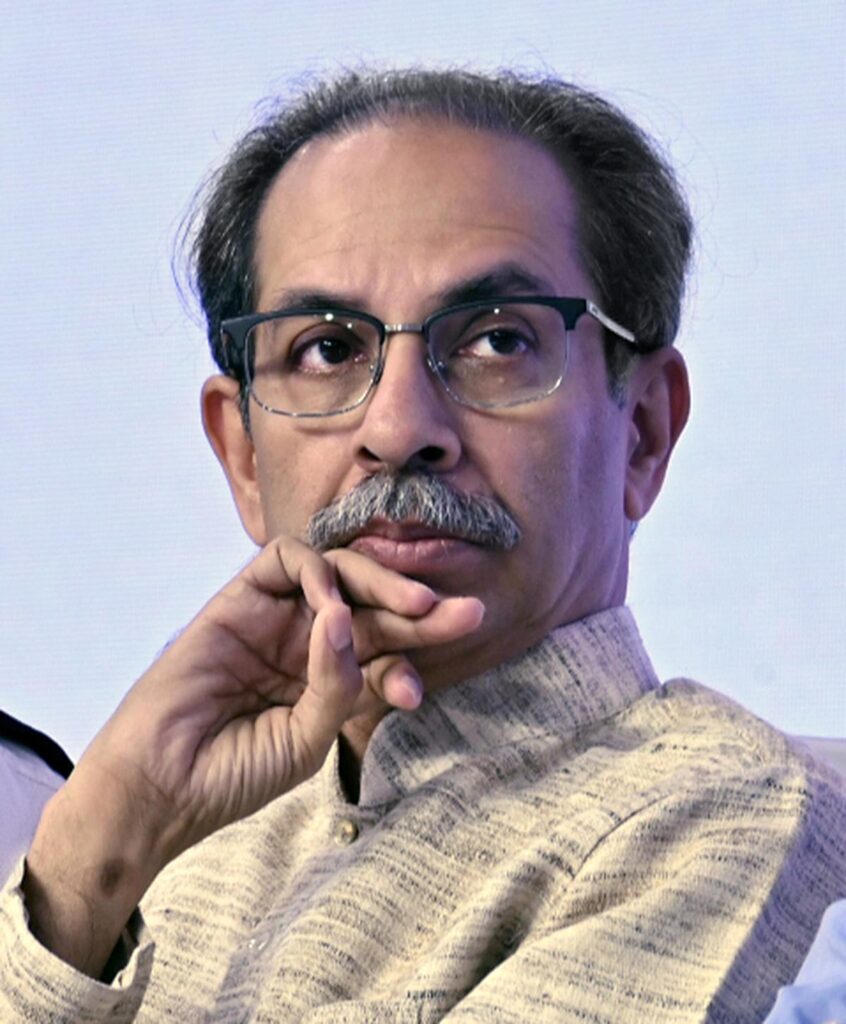
Uddhav Thackeray is an Indian politician and leader of Shiv Sena (UBT). Son of Balasaheb Thackeray, he served as Maharashtra’s Chief Minister from 2019 to 2022. Known for cultural advocacy, governance focus, and political resilience, he remains a key voice in state and national politics with significant grassroots support nationwide.
Introduction
Uddhav Thackeray is one of the most consequential political figures in modern Maharashtra politics. Son of the iconic Shiv Sena founder Balasaheb Thackeray, Uddhav has lived under the long shadow of his father’s towering persona and contentious legacy, yet he forged his own path—transitioning from a life rooted in arts and culture into the highest office of the state of Maharashtra. His journey—from media and photography to political stewardship and chief ministership—reflects both continuity and transformation within the Shiv Sena as a party and the broader landscape of regional politics in India.
Early Life and Family Background
Uddhav Balasaheb Thackeray was born on 27 July 1960 in Mumbai (then Bombay), Maharashtra, into a family deeply entrenched in Marathi socio-political activism. He was the youngest son of Bal Keshav Thackeray—popularly known as Balasaheb—and his wife Meena Thackeray. Bal Thackeray was a charismatic and controversial leader whose founding of the Shiv Sena in 1966 reshaped Marathi politics and identity.
Uddhav grew up alongside his siblings in a milieu that combined political fervour with strong Maharashtrian cultural pride. Despite this environment, his early passions were far removed from grassroots politics themselves.
Education and Early Interests
Uddhav received his early schooling at Balmohan Vidyamandir in Mumbai. He later pursued higher studies at the Sir J.J. School of Art, one of India’s premier institutions for visual arts. There, he developed a deep interest in photography, studying it as his major subject and refining his artistic sensibilities.
His interest in photography was not merely academic: it became a lifelong passion. Uddhav curated and displayed his photographic works publicly and published photo-books capturing the landscapes and cultural ethos of Maharashtra. These works include Maharashtra Desha and Pahava Vitthal, which reflect both his artistic vision and his connection to regional traditions and culture.
Unlike many political scions, Uddhav did not immediately step into the limelight of party politics upon completing his education. Instead, he nurtured his interests in visual arts, culture, and writing for years—elements that would later influence his style of leadership.
Marriage and Children
Uddhav Thackeray is married to Rashmi Thackeray, a media personality and influential figure in her own right. The couple has two sons: Aaditya Thackeray and Tejas Thackeray. Aaditya entered active politics and has been a prominent face in Shiv Sena’s youth wing, Yuva Sena, and held ministerial posts in the Maharashtra government when his father was Chief Minister. Tejas, in contrast, has generally maintained a lower public profile while pursuing personal interests.
This family background reflects a blend of media, culture, and politics—traits that have shaped Uddhav’s worldview.
Personality and Interests
From photography to environmental documentation, Uddhav brings a reflective, artistic dimension to his public persona. His early exhibitions of aerial shots of Maharashtra’s forts and rural landscapes drew critical appreciation, showcasing a side to his personality that was unlike the combative rhetoric typically associated with Shiv Sena leadership.
Entry Into Politics
Initial Distance and Gradual Involvement
For much of his early adult life, Uddhav was not directly involved in politics. Unlike his cousin Raj Thackeray, known for his oratory and political activism, Uddhav spent years focused on his artistic pursuits and media engagements. It was not until the early 2000s that he began to align more deeply with active political work.
First Major Role: 2002 BMC Campaign
Uddhav’s political initiation formally began in 2002, when he took on the role of Campaign In-Charge for Shiv Sena in the Brihanmumbai Municipal Corporation (BMC) elections. This task was significant: the BMC (Mumbai’s civic body) is one of the most powerful municipal entities in India, and winning there has long been a marker of political strength in the state. The election went in Shiv Sena’s favour, and Uddhav’s organizational capabilities drew attention within the party ranks.
Rise Through Party Ranks
In recognition of his work, Uddhav was appointed Working President of Shiv Sena in 2003, marking his formal ascent to the party’s top tier. Just three years later, in 2006, he took over as the Chief Editor of Saamana, the daily Marathi newspaper owned by Shiv Sena. Under his editorship, Saamana continued as a potent political mouthpiece for the party, influencing public discourse and political narratives. Uddhav eventually resigned as editor of Saamana in 2019 when he took on the responsibilities of Chief Minister.
At this stage, the shadow of his father Balasaheb was still very prominent, but Uddhav was increasingly seen as the heir apparent in the organizational hierarchy.
Leading the Shiv Sena Post-Bal Thackeray
Bal Thackeray’s Death and Succession (2012)
The passing away of Balasaheb Thackeray in November 2012 was a watershed moment for Shiv Sena and Maharashtra politics. Bal Thackeray had never formally contested elections nor held any constitutional post, yet his influence was unparalleled in Maharashtra. His death created a vacuum within the party and a broader realignment of regional politics.
Following his father’s death, Uddhav Thackeray was widely acknowledged as the new leader of Shiv Sena and subsequently became its President in 2013. His ascent was not without internal debate: his cousin Raj Thackeray, who had been a significant voice in the party earlier, left in 2006 to form the Maharashtra Navnirman Sena (MNS), reflecting early fissures in the Thackeray family’s political unity.
Organizational Transformation
Uddhav’s leadership style differed significantly from his father’s. Where Bal Thackeray’s rhetoric was fiery and confrontational, Uddhav emphasized organizational consolidation, media engagement, and inclusive rhetoric—especially aimed at forging broader alliances beyond traditional Shiv Sena allies.
Under his stewardship, Shiv Sena sought to evolve from a personality-driven political movement to a more structured political party capable of coalition politics.
Shiv Sena–BJP Alliance Legacy
For decades, Shiv Sena had been a core component of the National Democratic Alliance (NDA) led by the Bharatiya Janata Party (BJP). This partnership, forged in the 1980s and persisting into the 2010s, was based on shared cultural nationalism and electoral strategy.
When the 2014 Maharashtra Assembly elections took place, the alliance performed strongly, and Shiv Sena joined the state government alongside the BJP and its allies. Uddhav played a significant role in this cooperation, helping consolidate the party’s presence in state governance through legislative and executive collaboration.
The 2019 Break and Maha Vikas Aghadi
However, cracks emerged following the 2019 Maharashtra Assembly results. The BJP and Shiv Sena contested as allies but fell out over the Chief Minister’s post and power-sharing arrangements after the election. This disagreement—rooted in leadership ambition and ideological nuance—led to the Shiv Sena severing ties with the BJP.
In an unprecedented political realignment, Uddhav led Shiv Sena into an alliance with the Nationalist Congress Party (NCP) and the Indian National Congress—historically adversarial parties to Shiv Sena’s earlier politics. This coalition, known as the Maha Vikas Aghadi, marked a major ideological recalibration aimed at forming a stable government in Maharashtra.
The move showcased Uddhav’s strategic flexibility and willingness to prioritize governance over rigid ideological alignments.
Chief Ministership of Maharashtra (2019–2022)
Becoming Chief Minister
On 28 November 2019, Uddhav Thackeray took the oath as the 19th Chief Minister of Maharashtra, becoming the first member of the Thackeray family to occupy that constitutional office. The swearing-in ceremony was held at Mumbai’s iconic Shivaji Park, a symbolic location associated with Shiv Sena’s roots.
His rise to this position was historic: it represented a significant evolution from a media and organizational leader to the executive head of India’s second-most populous state.
Governance and Policy Focus
As Chief Minister, Uddhav focused on several key priorities:
Coalition Management
Managing the Maha Vikas Aghadi coalition required delicate negotiation. The partnership between Shiv Sena, NCP, and Congress encompassed divergent ideological traditions, requiring balancing regional aspirations, welfare priorities, and political agendas.
Development and Welfare
Uddhav’s government emphasized balanced development—focusing on infrastructure, healthcare, education, and employment opportunities. There was particular attention to rural welfare, urban planning, and environmental conservation.
Farmers and Environment
The administration undertook farmer welfare initiatives and engaged with environmental concerns, reflecting Uddhav’s personal interest in nature and sustainable development. Efforts were made toward altering transportation policies and pushing environmental resilience, especially in urban centres like Mumbai.
The period was also marked by global challenges—especially the COVID-19 pandemic—which tested the government’s crisis response mechanisms and public health infrastructure.
Political Crisis and Resignation (2022)
Internal Rebellion
By mid-2022, Uddhav’s leadership faced a severe internal challenge led by Eknath Shinde, a senior Shiv Sena leader and minister in the state government. Shinde advocated returning to an alliance with the BJP and sought greater autonomy from Uddhav’s leadership direction.
The rebellion escalated as a significant number of Shiv Sena legislators sided with Shinde, triggering a political crisis that shook the Maha Vikas Aghadi coalition.
Resignation from Chief Ministership
On 29 June 2022, facing a potential floor test and mounting legislative opposition, Uddhav Thackeray resigned as Chief Minister of Maharashtra. The decision marked the end of his tenure but also reflected the complexities of coalition politics and internal party dynamics.
Uddhav challenged the constitutional process before the Supreme Court, contesting aspects of the Speaker’s actions and the timing of the floor test order, but ultimately the court refused to stay the proceedings.
Loss of Party Name and Symbol
In the aftermath, the Election Commission of India recognized Eknath Shinde’s faction as the legitimate Shiv Sena, granting control of the party’s name and iconic symbol (Bow and Arrow). As a result, Uddhav’s faction adopted the Flaming Torch symbol and the suffix (UBT)—Uddhav Balasaheb Thackeray—to continue its political identity.
This period constituted one of the most dramatic shifts in the party’s history, reshaping Shiv Sena’s organizational structure and political branding.
Post-Chief Ministership: Leader of Opposition
Opposition Leadership
After 2022, Uddhav transitioned into the role of Leader of Opposition in the Maharashtra legislative context. He has remained an active voice in regional politics and continued to assert Shiv Sena (UBT)’s relevance and relevance of its political identity.
Recent Political Activities
Throughout 2024–2025, Uddhav has remained politically engaged—participating in public rallies, addressing civic issues, and reiterating his party’s stance on maintaining Marathi identity and welfare priorities. Periodic news reports note his critiques of rival political strategies and his efforts to sustain grassroots support for his faction.
In 2025, Uddhav was also reinstated as the Chairperson of the Balasaheb Thackeray National Memorial Public Trust, overseeing the development of a memorial for his father near Shivaji Park.
Uddhav Thackeray Networth
Redefinition of Shiv Sena
Uddhav Thackeray’s leadership represented a significant era for Shiv Sena. He steered the party from a hardline regional force allied to the BJP into a broader coalition framework, emphasizing governance, social welfare imperatives, and cross-ideological cooperation. This reorientation—though controversial and electorally contested—expanded the party’s engagement beyond traditional confines.
Governance Amidst Challenges
As Chief Minister, Uddhav navigated intense political pressures, coalition complexities, and unprecedented crises such as the COVID-19 pandemic. His emphasis on balanced development and his administrative priorities have left an imprint on Maharashtra’s policy narrative.
Criticism and Internal Dissent
Uddhav’s tenure was also marked by criticism from within and outside the party. Detractors argued that his leadership style was less assertive than needed to maintain party unity, contributing to the internal rebellion led by Shinde. His strategic choice to align with ideological rivals drew both praise and censure.
Political Identity and Future Prospects
Despite setbacks, Uddhav continues to be a significant figure in Maharashtra’s political landscape. His efforts to sustain Shiv Sena (UBT) as an active political entity, and his engagement with grassroots supporters, underscore his enduring presence in public life.
Conclusion
Uddhav Thackeray’s biography is a story of evolving leadership—from a young artist and photographer to a seasoned political leader who led a major Indian state. His journey reflects both the weight of legacy and the challenges of political adaptation in a democratic and pluralistic context. Through his years in public life, Uddhav has attempted to balance tradition with transformation, often in the face of formidable political storms.
Though his tenure as Chief Minister ended under turbulent circumstances, his role in reshaping Maharashtra politics—especially through coalition building and policy priorities—remains a subject of study for political analysts and observers of regional politics. Whether his legacy is ultimately judged by electoral success or political resilience, Uddhav Thackeray stands as a defining figure of his generation in Indian politics.
Uddhav Thackeray Date Of Birth ?
27 July 1960
Uddhav Thackeray Networth ?
Total Assets (2020): (approx. Rs 143 Crore).
Total Liabilities (2020): (approx. Rs 15 Crore).
Uddhav Thackeray Father Name ?
Bal Keshav Thackeray